
How to set up a budget
7 min read
ADHD can make budgeting and money management harder due to impulsive spending, forgetfulness and financial overwhelm. This guide explains practical ADHD budgeting strategies, money management tips and systems that can help neurodivergent Australians reduce stress, stay organised and build financial confidence.
If you’ve got ADHD or you’re neurodivergent, managing money can feel like herding caffeinated cats. There’s impulsive spending. Forgotten bills pile up.
Before you know it, you’re waiting for payday again. You’re staring at overdue notices and late fees.
You’re not bad with money. Your busy brain is simply wired differently. And that makes managing your money harder, but not impossible.
Many adults with ADHD can feel embarrassed or ashamed about money struggles, especially if they’ve tried budgeting apps, spreadsheets or strict budgets before without success. But often the issue isn’t motivation; it’s finding a system that actually works with the way your brain operates.
At MyBudget, we know that ADHD and money stress often go hand-in-hand. Here’s how to spot the challenges and set up systems that stick when budgeting with ADHD. This will also help you build financial confidence.
Managing money with ADHD can feel harder because ADHD affects executive functioning skills like planning, organisation, impulse control and remembering tasks. This can make budgeting, paying bills and staying on top of finances more difficult.
Australian data is still limited.
A UK study by Monzo found that adults with ADHD are:
Yes. Overspending can be linked to ADHD because managing money often involves impulse control, emotional regulation, organisation and future planning; areas many people with ADHD find challenging.
For neurodivergent people, having ADHD can bring daily challenges like:
These are common signs of money challenges with ADHD, but the right financial tools and strategies can help you turn them around.
As an adult with ADHD I struggled for years with debt and impulse spending. MyBudget has changed my life. My bills are paid on time, no more debt, I saved to achieve my dream to travel.
Gina, MyBudget client – Trustpilot review
ADHD financial struggles can look different for everyone, but common signs include:
The best ADHD budgeting systems reduce overwhelm, automate decisions, and create accountability. Many people with ADHD benefit from:
Many people with ADHD find DIY budgeting apps difficult to stick to because they still rely on self-discipline and manual check-ins. MyBudget combines human support, automation and accountability to reduce the mental load.

While there aren’t any official ADHD money types, we’ve mapped out common money personalities based on the most common ADHD money challenges, and we know you’ll relate to at least one of them. Knowing which one feels like you can help you find the right fixes.
As someone with ADHD I have always been horrible with my finances. Forgetting bills, zero savings and living pay-to-pay. Within 3 years we’d paid off 50% of our debt, saved and paid for our wedding.
Jacqueline, MyBudget client – Trustpilot review
Sound familiar? Let’s pick one ADHD money type that’s most “you”:
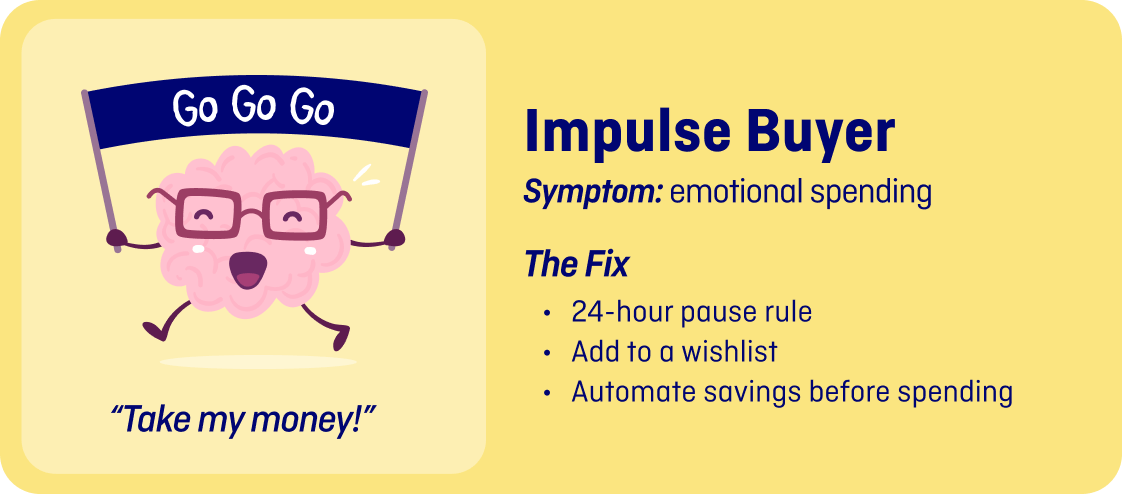
“I see it, I want it, I buy it. Budget? What budget?”
Your fix: Pause big purchases, keep a wishlist instead of buying instantly, and set up automatic payments or a savings debit card so money is tucked aside before you can spend it.
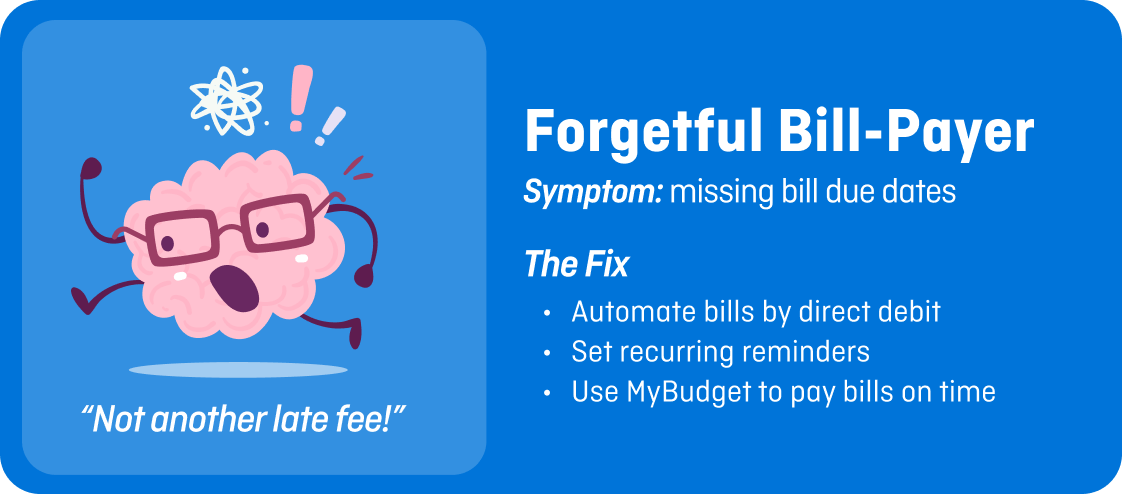
“Oh no, was that bill due yesterday?!”
Your fix: Automate bill payments through online banking or direct deposits, set reminders and alerts in digital calendars, or let MyBudget handle automatic bill payments for you.
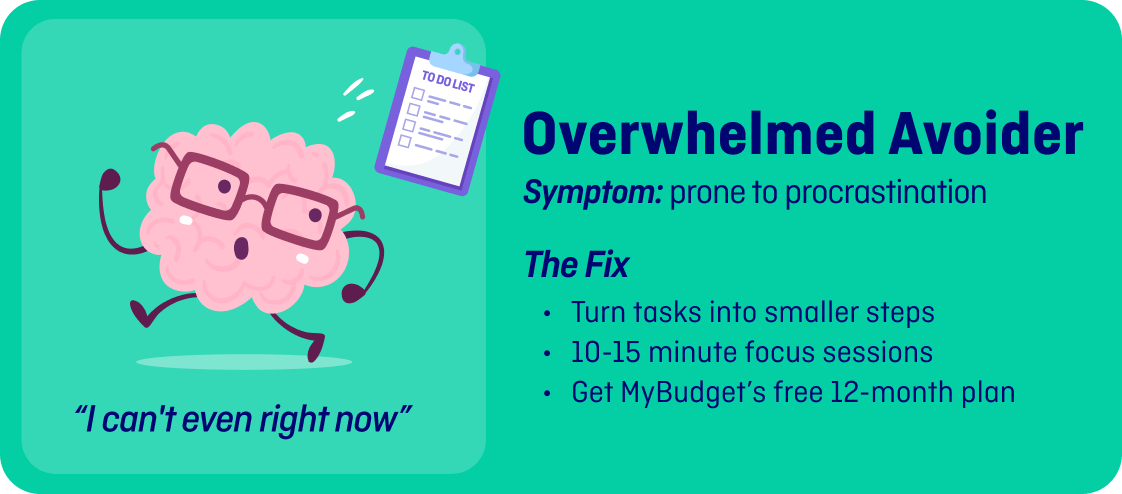
“Managing your money feels overwhelming and gets pushed aside.”
Your fix: Break financial tasks into micro-steps, use a simple spending plan, or if it still feels overwhelming, outsource to MyBudget where we can take care of the hard stuff.
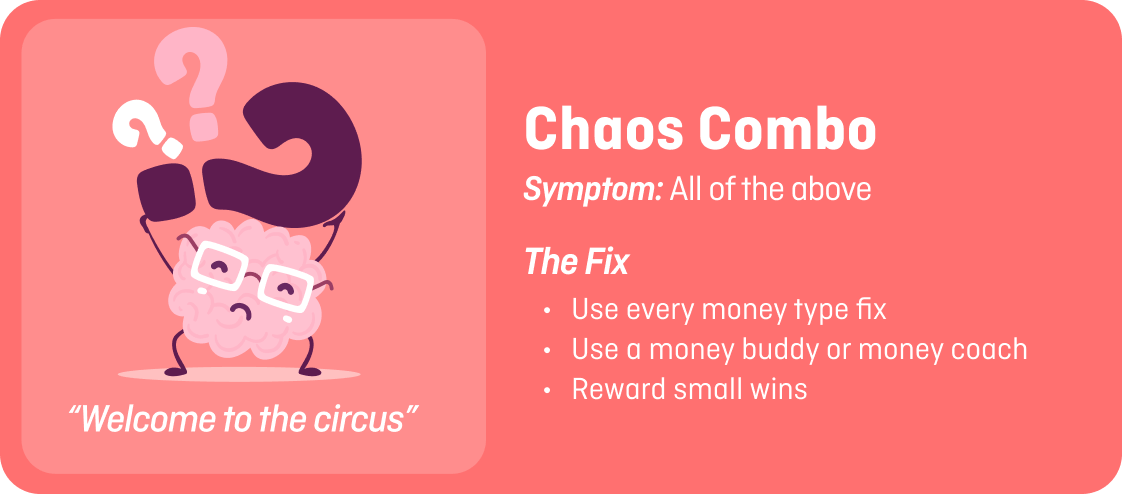
“Yep, that’s me, impulsive, forgetful, overwhelmed… hello, chaos.”
Your fix: Combine the above strategies, add accountability with an ADHD buddy or a MyBudget Money Coach, and focus on progress over perfection.
ADHD budgeting works best when systems are simple, visual, automated and easy to repeat.
Get it all out of your head and onto paper (or your notes app). List:
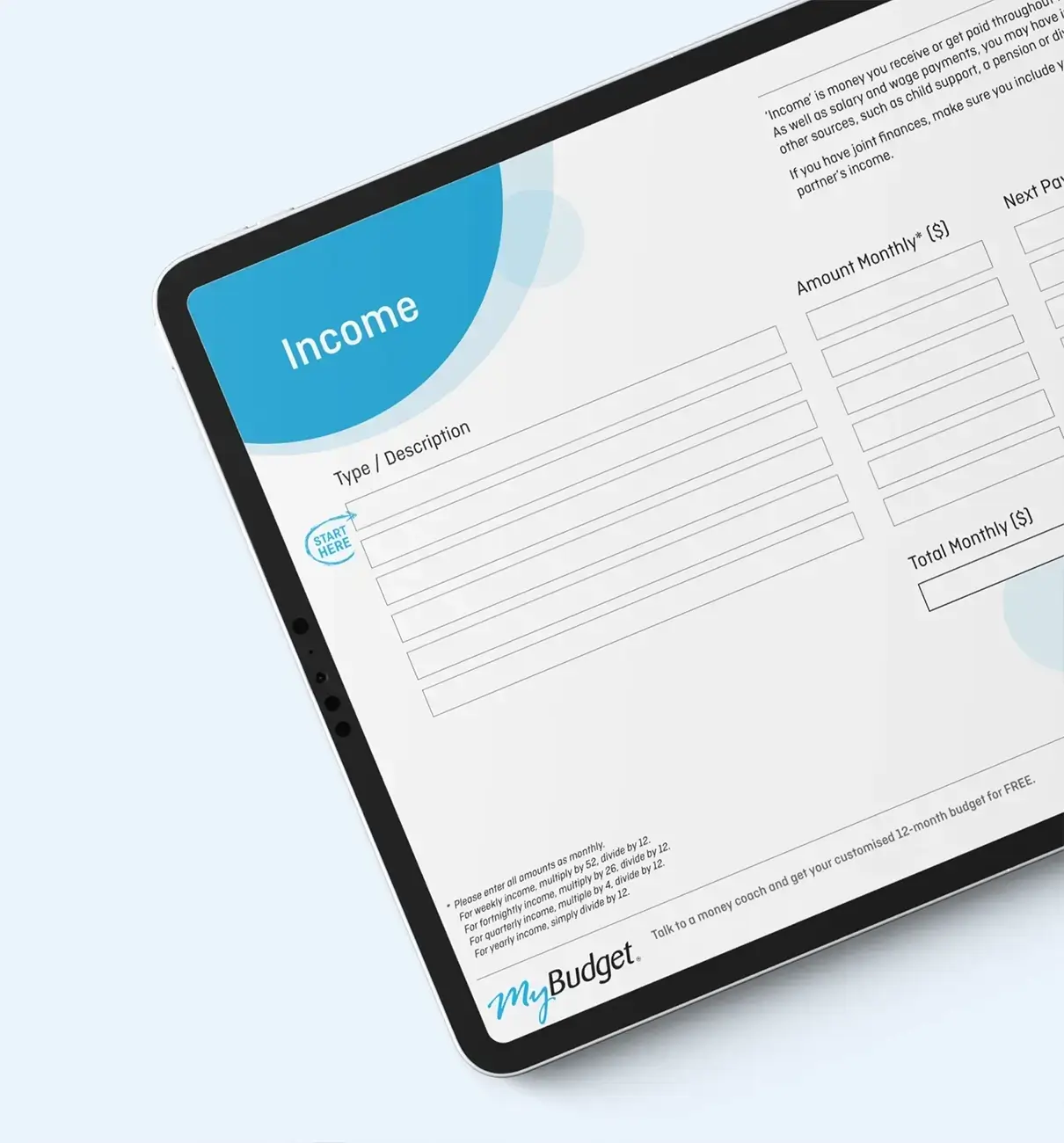
Seeing it in black and white reduces overwhelm. You can also try our free Personal Budget Template to get started and organise everything in one place. These are practical budgeting tips for people with ADHD.
Direct debits and autopay systems are your friend. If you can pay it automatically, do so. Think of it as future-you giving present-you less money stress. This is one of the easiest ways to budget with ADHD, and it helps you avoid late fees.
Just like you need a home base for your keys, set up a system for your money. This could include using one account for recurring, fixed bills, and a separate account for changing, variable expenses.
Or it may be a MyBudget plan that shows what comes in and goes out. Visualise your budget with pie charts or bar graphs to track cash flow.
Instead of writing “organise my finances.”
Write “log in to online banking,” “check electricity bill,” “transfer $50.”
ADHD brains thrive on small wins and this helps when you’re wondering how to stick to a budget with ADHD.
ADHD and money love a buddy system. Whether it’s a friend, a partner, an ADHD coach, or your MyBudget Money Coach, having support can help. It can keep you on track and make a real difference. Accountability boosts financial literacy and financial wellbeing.
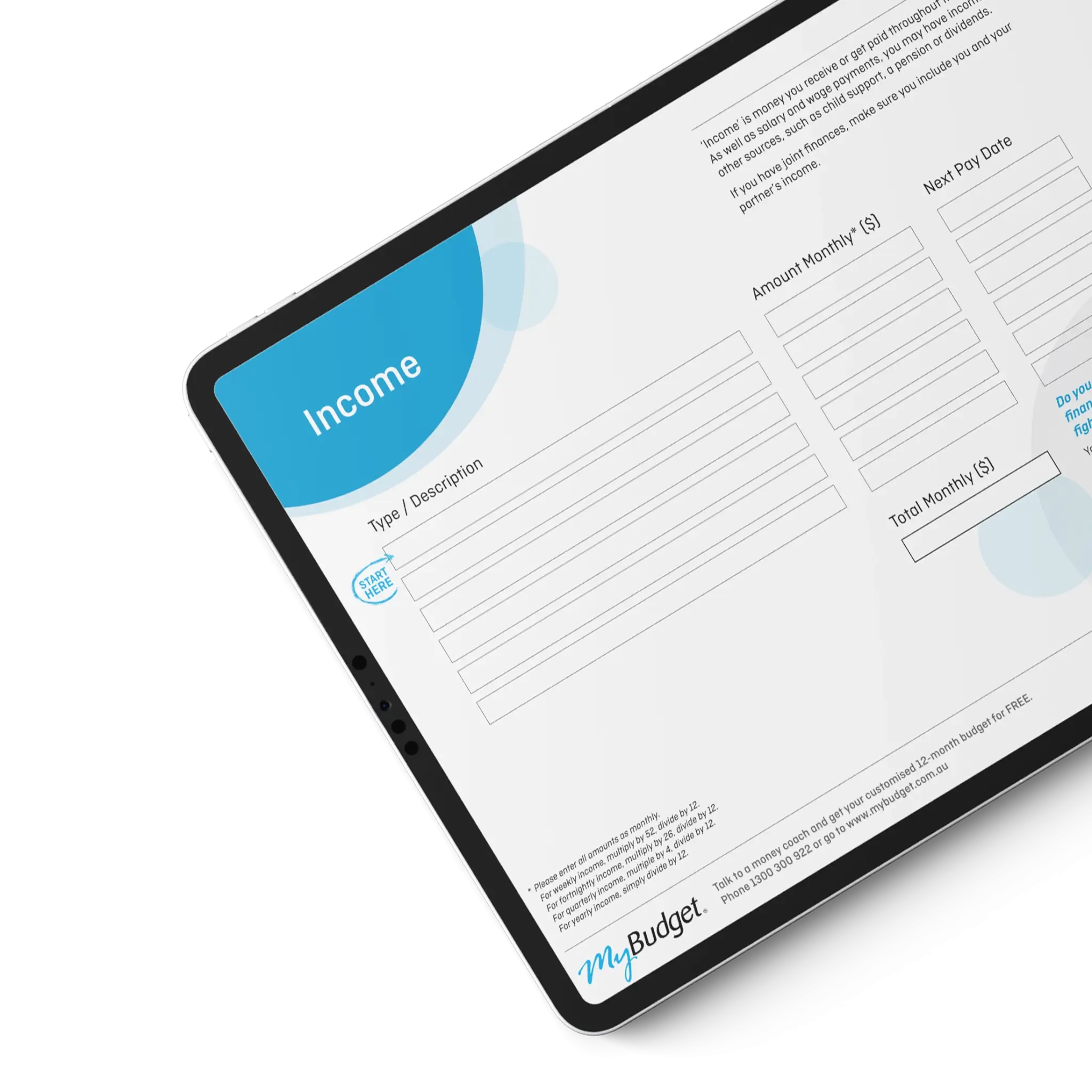
For over 25 years, MyBudget has helped more than 130,000 Australians (ADHD or not) manage their money:
You can also explore how your savings will grow using our free Savings Calculator.
Clients often tell us the best part of MyBudget is our 12‑month projection.
It gives you a roadmap for your money.
Shows when you could be debt free.
And, helps you reach your savings goals faster.
This clear view of the future sets us apart from traditional DIY budgeting apps.
Did you know?
92.6% of MyBudget clients said their financial stress reduced significantly after joining, with average financial stress levels dropping by 57%.
MyBudget’s client survey, 2026
With the right system and support, everyone can feel in control of their finances and reach financial success no matter what part of the beautiful spectrum they are on.
or call us on 09 849 6285.. because you know it always feels easier once it’s done!

Can’t find what you’re looking for?
See more FAQs…
Yes. ADHD can make money management more difficult because it affects executive functioning skills like planning, organisation, memory and impulse control. This may lead to missed bills, overspending, late fees, financial overwhelm and difficulty sticking to a budget.
Yes. Impulse spending is commonly linked to ADHD because shopping and emotional spending can provide short-term dopamine rewards. This may lead to unplanned purchases, difficulty delaying gratification and challenges building long-term savings.
The best budgeting method for ADHD is usually one that simplifies decision-making and reduces mental load. Automated bill payments, separate spending accounts, visual budgeting tools and simple routines can help people with ADHD stay organised and consistent with money management.
Yes. MyBudget helps many Australians with ADHD by providing hands-on budgeting support, bill payment management, structure and accountability. For people who feel overwhelmed managing finances alone, having a clear plan and human support can reduce stress and improve financial confidence.
This article has been prepared for information purposes only, and does not constitute personal financial advice. The information has been prepared without taking into account your personal objectives, financial situation or needs. Before acting on any information in this article you should consider the appropriateness of the information having regard to your objectives, financial situation and needs.